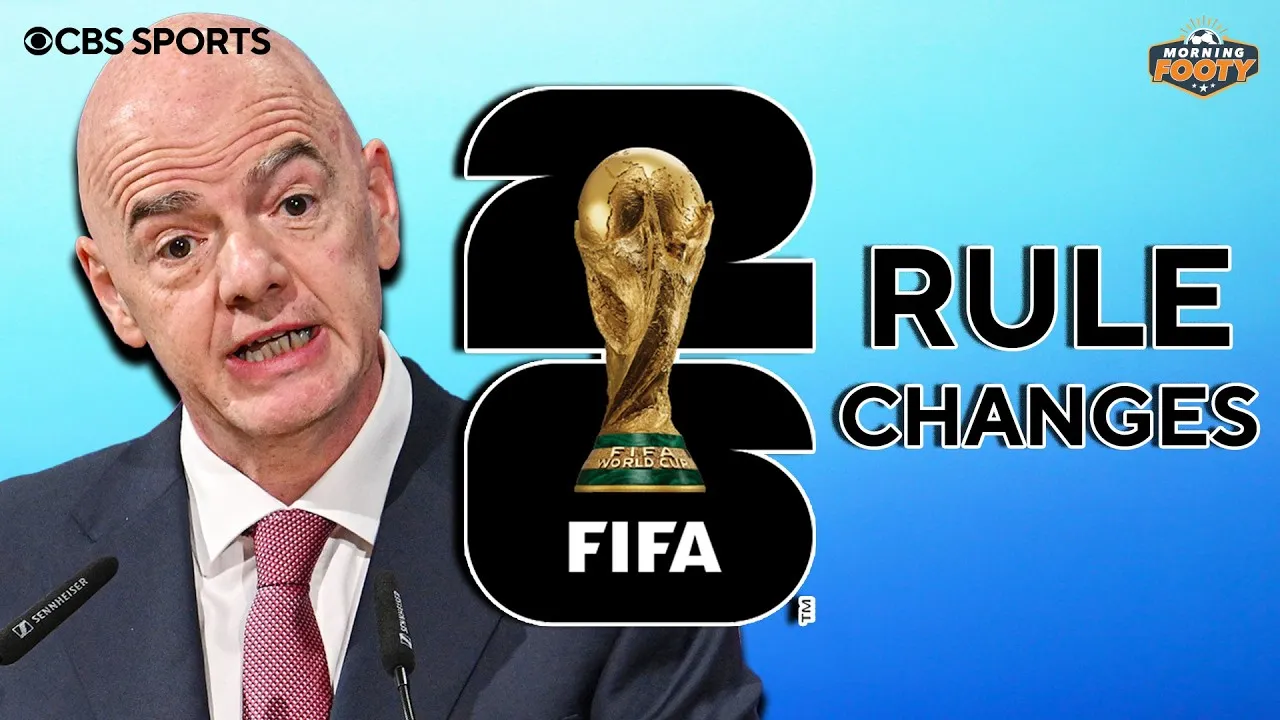
FIFA rule changes have always been a hot topic among football fans, coaches, and players because even a small tweak in the Laws of the Game can completely change how football is played and experienced. From controversial handball rules to VAR decisions that stop celebrations mid-goal, the evolution of football laws tells a fascinating story of how the sport adapts to technology, fairness, and modern audiences.
If you’ve ever wondered why certain goals are disallowed, why goalkeepers can’t hold the ball forever, or why stoppage time seems longer these days, this deep dive will help you understand the biggest FIFA rule updates and what they mean for the future of football.
The Evolution of Football Laws and FIFA’s Role
Football started as a simple game with minimal rules. Over time, governing bodies realized that standardization was necessary to ensure fairness across countries and competitions. FIFA, alongside the International Football Association Board (IFAB), is responsible for approving and implementing global football laws.
Every year, IFAB meets to review how the game is played and whether certain laws need updates. These decisions are based on match data, fan feedback, referee experiences, and technological advancements. The goal is not to complicate football but to make it fairer, safer, and more entertaining.
FIFA rule changes in Handball Interpretation
Handball has probably been the most controversial rule in recent years. Fans often argue about whether a handball was intentional or accidental, especially in penalty decisions.
Recent updates clarified what counts as a punishable handball. A handball is now more strictly defined by body positioning and whether the arm is unnaturally enlarged. If a player scores directly with their hand or arm, the goal is automatically disallowed, regardless of intent.
This change aimed to remove confusion and ensure consistency, but it also sparked debates when defenders were penalized for split-second arm movements. For players, it has meant adapting defensive techniques, keeping arms closer to the body, and improving spatial awareness inside the box.
VAR and Technology-Driven Rule Adjustments
Video Assistant Referee, commonly known as VAR, has completely changed football officiating. While VAR itself is not a law, FIFA rule modifications were introduced to integrate video review into match decisions.
VAR is used for goals, penalties, red cards, and cases of mistaken identity. The challenge has been balancing accuracy with the flow of the game. To address this, FIFA encouraged referees to make quicker decisions and only intervene when there is a clear and obvious error.
These technology-driven changes have increased fairness but also created emotional rollercoasters for fans. Celebrating a goal now sometimes comes with a nervous glance at the referee’s earpiece.
FIFA rule changes in Goalkeeper Regulations
Goalkeepers have always had special privileges, but their rules have also evolved. One of the most impactful updates was limiting how long goalkeepers can hold the ball. Currently, keepers must release the ball within six seconds, or the opposing team is awarded an indirect free kick.
More recently, FIFA clarified goalkeeper behavior during penalty kicks. Keepers must keep at least one foot on the goal line when the penalty is taken. This rule was introduced to prevent unfair advantages and ensure penalty takers have a fair chance.
The impact has been significant. Goalkeepers now train specifically for penalty scenarios, focusing on reaction rather than stepping forward early.
Changes to Offside Interpretation
Offside has always been one of the most misunderstood rules in football. The basic idea remains the same, but FIFA clarified certain aspects to reduce confusion.
A player is considered offside if any part of their body that can legally score a goal is beyond the second-last defender. This means hands and arms are not considered, but shoulders, knees, and feet are.
The introduction of semi-automated offside technology in major tournaments further influenced how the rule is applied. Decisions are now based on precise measurements rather than human judgment alone, which has reduced controversy but also removed the margin of error that once existed.
Substitutions and Squad Management Updates
Substitution rules changed significantly after the COVID-19 pandemic. To protect player health and reduce fatigue, FIFA allowed teams to make up to five substitutions in a match instead of the traditional three.
This change has had a tactical impact on football. Coaches now manage squads differently, using substitutions strategically to maintain intensity. Younger players also get more opportunities, which benefits squad development and competition.
Many leagues and competitions have permanently adopted this rule, showing how temporary adjustments can become long-term reforms.
Timekeeping and Added Time Transparency
One of the most noticeable recent FIFA updates relates to timekeeping. Referees now add more accurate stoppage time to compensate for injuries, substitutions, VAR checks, and time-wasting.
This change was highlighted during the FIFA World Cup, where matches frequently had 10 or more minutes of added time. The goal was to ensure that the actual playing time remains consistent and fair.
Fans have mixed reactions. Some love the extra drama, while others feel matches have become too long. Regardless, this change reflects FIFA’s commitment to maximizing active playtime.
Disciplinary Rule Adjustments and Fair Play
FIFA has also refined disciplinary rules to promote fair play. Referees are encouraged to punish simulation more strictly and protect players from dangerous tackles.
Red card criteria were clarified to distinguish between serious foul play and reckless challenges. This helps referees make more consistent decisions and reduces unnecessary controversies.
Additionally, respect campaigns and stricter penalties for abuse toward referees have been introduced to improve the game’s culture.
How FIFA rule changes Affect Players and Coaches
Rule changes are not just theoretical; they directly impact how football is played. Coaches adjust tactics, players modify techniques, and referees undergo continuous training.
For example, stricter handball rules have influenced defensive training drills. VAR has changed how defenders position themselves during set pieces. Increased substitutions have led to higher-intensity pressing strategies.
These changes demonstrate that football is not static. It evolves with time, technology, and societal expectations.
Real-Life Example: A Match Changed by Rule Updates
Imagine a Champions League match where a last-minute goal is scored, but VAR reviews a potential offside decision. The semi-automated system detects a player’s shoulder slightly beyond the defender, and the goal is disallowed.
Under older rules, this might have been allowed due to human error or interpretation. But modern FIFA rule changes prioritize precision, even if the decision feels harsh to fans.
This example shows how football has shifted toward data-driven fairness, sometimes at the cost of emotional spontaneity.
Youth Football and Grassroots Rule Adaptations
FIFA doesn’t only focus on professional football. Youth and grassroots football also benefit from rule adaptations designed to improve player development and safety.
Smaller pitch sizes, modified offside rules, and flexible substitution policies help young players learn the game without excessive pressure. These adaptations aim to make football more inclusive and enjoyable for beginners.
By refining rules at all levels, FIFA ensures the sport remains accessible and sustainable for future generations.
Commercial and Entertainment Impact of Rule Changes
Football is not just a sport; it is a global entertainment industry. Rule changes also consider fan engagement and broadcast value.
More accurate timekeeping, clearer decisions, and faster gameplay make matches more appealing to modern audiences. VAR graphics, referee explanations, and transparent decision-making enhance viewer understanding.
These changes help maintain football’s popularity in an era where audiences have countless entertainment options.
Controversies Surrounding Modern Rule Updates
Despite good intentions, FIFA updates often spark controversy. Fans argue that the game is becoming too technical and losing its human element. Critics believe VAR slows down matches and removes spontaneous celebrations.
Others feel that strict handball and offside interpretations lead to unfair outcomes. However, supporters argue that fairness and consistency are more important than nostalgia.
This ongoing debate highlights the challenge FIFA faces in balancing tradition with innovation.
Future Trends in Football Regulations
Looking ahead, more technological integration is expected. Ideas such as automated refereeing, advanced player tracking, and AI-assisted decisions are being discussed.
There is also talk about further reducing time-wasting, improving player welfare, and enhancing fan transparency. FIFA continuously experiments in youth tournaments and friendly competitions before implementing global changes.
The future of football rules will likely focus on speed, fairness, and audience engagement.
EEAT Perspective: Why FIFA Rule Changes Matter
From an EEAT standpoint, FIFA rule updates demonstrate expertise, authority, and trustworthiness in sports governance. Decisions are based on data analysis, expert referee feedback, and global consultations with football associations.
Transparency in law changes builds trust among fans, players, and stakeholders. Educational resources, referee training programs, and public explanations further strengthen FIFA’s credibility.
Understanding these rules empowers fans to appreciate the game beyond surface-level excitement and interpret decisions with informed context.
FIFA rule changes and Their Impact on Global Football Culture
Football rules shape how the game is played in every corner of the world. From street football in India to professional leagues in Europe, consistent laws ensure a unified experience.
Changes in rules influence coaching styles, fan discussions, sports journalism, and even betting markets. They become part of football culture, sparking debates, memes, and viral moments.
The global nature of football means every rule update echoes across millions of matches and billions of fans.
Final Perspective Without a Conclusion
Football will continue to evolve, and FIFA rule changes will remain a central part of that evolution. Whether you love VAR, hate handball penalties, or enjoy longer stoppage time drama, one thing is certain: the Laws of the Game will keep adapting to modern football’s challenges and opportunities.
As fans, understanding these changes deepens our appreciation for the sport, turning every controversial call into a learning moment and every rule update into a new chapter in football history.
Read also:-
chennaiyin fc vs kerala blasters player ratings
real madrid vs girona fc lineups
mohun bagan super giant vs east bengal fc lineups
kerala blasters vs northeast united fc lineups
bengaluru fc vs roundglass punjab fc standings