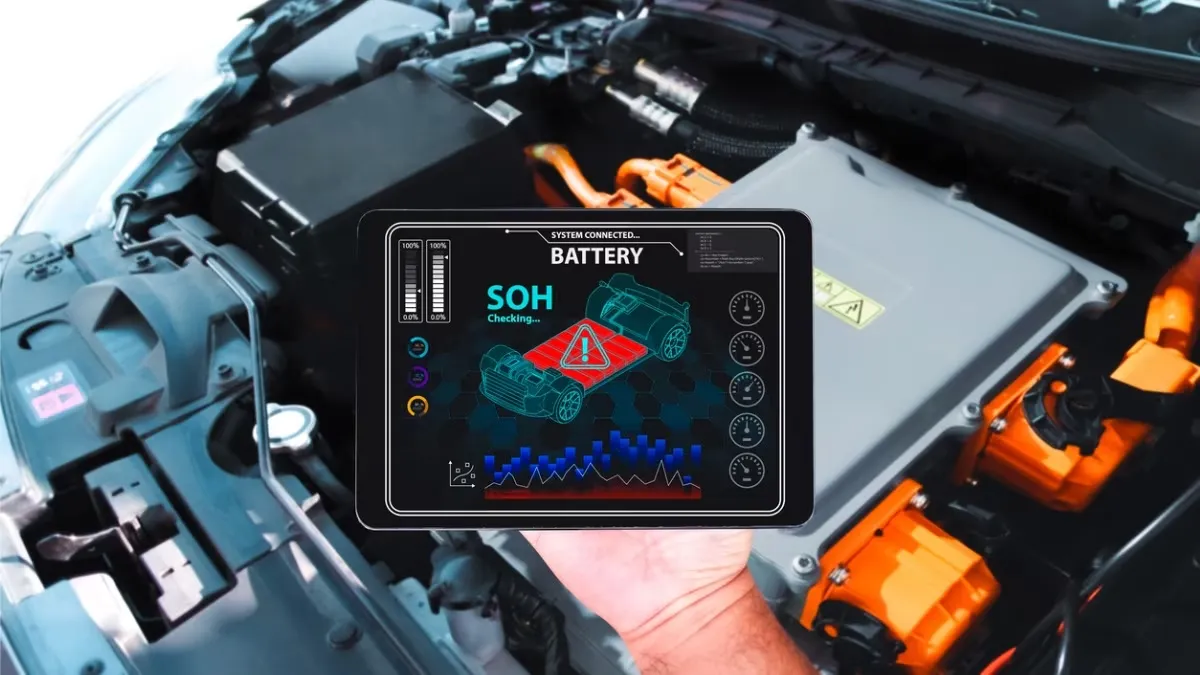
EV Battery Health Check is not just a technical routine; it’s the backbone of your electric vehicle’s performance, safety, and long-term value. Whether you drive a sleek Tesla sedan or a practical Nissan hatchback, your battery is the most expensive and essential component in your EV.
As electric vehicles become mainstream across cities like Mumbai and Bangalore, more owners are realizing that maintaining battery health is just as important as servicing a traditional engine. But unlike oil changes and spark plugs, battery care feels invisible. There’s no sound, no smoke, and no obvious sign—until range starts dropping.
This in-depth guide explains everything you need to know about battery diagnostics, real-world testing, professional tools, warning signs, and smart ownership strategies. If you want your EV to stay efficient for 8–12 years or more, this knowledge is essential.
Why EV Batteries Deserve Special Attention
An EV battery isn’t like the small battery in your smartphone. It’s a complex, high-voltage lithium-ion system made of thousands of individual cells working together. These cells gradually degrade over time due to charging habits, heat exposure, and driving patterns.
In traditional cars, engine wear happens slowly and visibly. In EVs, battery degradation is subtle. You might not notice it until your range drops from 400 km to 340 km.
That’s where a consistent EV Battery Health Check becomes critical. It helps you detect early signs of degradation before they turn into expensive surprises.
Modern EV manufacturers like Hyundai and Tata Motors integrate advanced Battery Management Systems (BMS). But technology alone is not enough. Owners still need awareness and periodic checks.
What Is an EV Battery Health Check?
An EV Battery Health Check is a diagnostic assessment of your vehicle’s battery condition. It evaluates parameters such as State of Health (SOH), State of Charge (SOC), internal resistance, cell balance, and thermal performance.
State of Health is especially important. It tells you how much of the battery’s original capacity remains. If your EV had a 60 kWh battery when new and now effectively holds 54 kWh, your SOH is around 90%.
This check can be done in three main ways. Some EVs provide basic battery health data directly in the dashboard settings. Others require manufacturer service diagnostics. Independent EV service centers also use professional scanning tools to perform deep analysis.
The purpose of an EV Battery Health Check is not just to measure degradation. It’s to predict future performance and identify potential safety risks.
Real-Life Example: Why Battery Checks Matter
A friend of mine purchased a used electric car after seeing a great deal online. The range displayed 320 km, which seemed acceptable. However, within three months, the practical range dropped to barely 250 km.
When he finally requested a detailed EV Battery Health Check, the results showed the battery health was only 78%. The seller had reset certain system indicators, masking real degradation.
This experience highlights why battery verification is crucial before buying or selling an EV. It protects both buyers and owners from unpleasant financial surprises.
Signs You Should Schedule an EV Battery Health Check
You don’t need to wait for a warning light. There are subtle indicators that your battery may need attention.
If your EV range is dropping faster than expected, especially in moderate weather, that’s a sign. If charging time has increased noticeably, it could indicate internal resistance issues. Sudden percentage drops while driving also suggest imbalance between battery cells.
Another indicator is overheating during fast charging sessions. Batteries exposed to high temperatures frequently degrade faster.
Whenever you notice performance changes, scheduling an EV Battery Health Check gives clarity instead of guesswork.
How Often Should You Perform an EV Battery Health Check?
Most manufacturers recommend annual inspections, especially after the first two years of ownership. However, heavy drivers who frequently use DC fast charging may benefit from more frequent checks.
If your EV is under warranty, routine documentation of battery health strengthens any future warranty claims. Many brands offer 8-year or 160,000 km battery warranties, but proof of responsible ownership matters.
A yearly EV Battery Health Check ensures your car remains efficient and resale-ready.
What Happens During a Professional EV Battery Health Check?
A certified technician connects diagnostic equipment to your vehicle’s onboard system. Advanced software analyzes battery modules individually.
The technician checks cell voltage differences, internal resistance levels, temperature distribution, and charging history. Even slight voltage imbalances between modules can signal future degradation.
The process typically takes 30 to 60 minutes. Some service centers generate a detailed battery health certificate, which is extremely valuable for resale.
An accurate EV Battery Health Check can increase buyer confidence significantly.
Understanding State of Health (SOH)
State of Health is the headline number most EV owners care about. It represents the battery’s remaining usable capacity compared to when it was new.
A battery with 95% SOH is performing excellently. Around 85–90% after several years is considered normal. Below 80% may indicate significant degradation, depending on usage patterns.
An EV Battery Health Check that reports declining SOH doesn’t mean immediate failure. It simply reflects gradual chemical aging inside lithium-ion cells.
The Role of Charging Habits
Charging behavior dramatically influences battery longevity. Frequently charging to 100% and draining to near 0% accelerates degradation.
Most EV experts recommend keeping daily charge between 20% and 80% for routine driving. Fast charging is convenient but should not be overused.
An EV Battery Health Check often reveals patterns linked to charging behavior. Owners who adopt balanced charging habits typically show slower degradation over time.
Climate and Battery Health
Extreme heat and cold both impact battery performance. High temperatures increase chemical stress, while freezing temperatures temporarily reduce range.
In hot regions, parking in shaded or covered areas makes a difference. Many modern EVs use liquid cooling systems to regulate battery temperature.
When conducting an EV Battery Health Check, technicians analyze thermal data to detect excessive heat exposure history. Consistent overheating may signal future performance decline.
EV Battery Health Check Before Buying a Used EV
Buying a pre-owned electric vehicle without verifying battery health is risky.
A proper EV Battery Health Check provides objective proof of battery condition. It confirms real-world capacity instead of relying solely on dashboard range.
Resale markets increasingly demand battery health certificates. Without one, negotiating price becomes difficult.
If you’re considering a used EV from brands like MG Motor or BYD, a certified battery report ensures transparency.
Can You Do an EV Battery Health Check at Home?
Some EVs allow owners to access battery health information through companion mobile apps. Third-party OBD scanners can also retrieve detailed data in certain models.
However, interpreting raw data requires expertise. Voltage deviations and internal resistance readings are not always straightforward.
While home monitoring is useful, a professional EV Battery Health Check remains the most reliable method for accurate assessment.
How Battery Degradation Impacts Resale Value
Battery condition directly affects resale pricing. Two identical EV models can have dramatically different values depending on battery health.
A documented EV Battery Health Check showing 92% SOH can significantly increase buyer trust.
Dealers increasingly request battery reports before accepting trade-ins. Transparent reporting aligns with EEAT principles—Experience, Expertise, Authoritativeness, and Trustworthiness.
Providing documented proof enhances credibility during transactions.
Safety Implications of Poor Battery Health
While battery failures are rare, neglected degradation can increase risks. Imbalanced cells may overheat under stress.
Regular EV Battery Health Check routines detect early warning signs before safety becomes a concern.
Professional diagnostics ensure thermal systems and battery modules are functioning correctly. Prevention is always safer than reactive repairs.
Battery Warranty and Health Monitoring
Most EV manufacturers provide long-term battery warranties. However, warranties typically cover severe capacity loss below a defined threshold.
Consistent EV Battery Health Check documentation supports warranty claims if needed.
If battery health drops below warranty limits within coverage period, manufacturers may replace or repair modules.
Keeping records demonstrates responsible ownership and strengthens your position in case of disputes.
The Future of EV Battery Diagnostics
Battery technology is rapidly evolving. Solid-state batteries and improved lithium chemistries promise longer lifespans.
Artificial intelligence is also entering diagnostics. Predictive analytics can forecast battery degradation years in advance.
In the near future, an EV Battery Health Check may become as simple as an automated monthly digital report delivered to your phone.
As EV adoption increases globally, battery transparency will become a standard expectation rather than a luxury.
Final Reflection on Responsible EV Ownership
Owning an electric vehicle is about sustainability, innovation, and smart mobility. But real sustainability begins with proper maintenance.
An informed owner who understands the value of a regular EV Battery Health Check protects not just their wallet, but also the environment by extending battery life.
Battery care is not complicated. It’s about awareness, routine monitoring, and balanced charging habits. With the right approach, your EV can deliver reliable performance for many years without major issues.
Read also :-
6034228300
8552286631
8005564146
6163177933